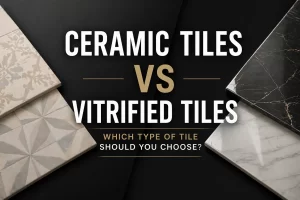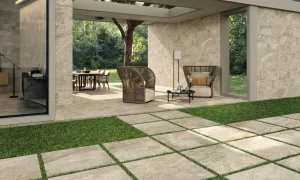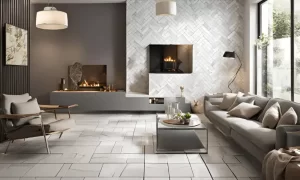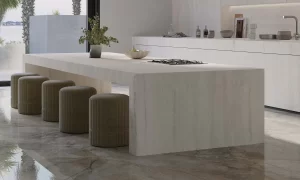
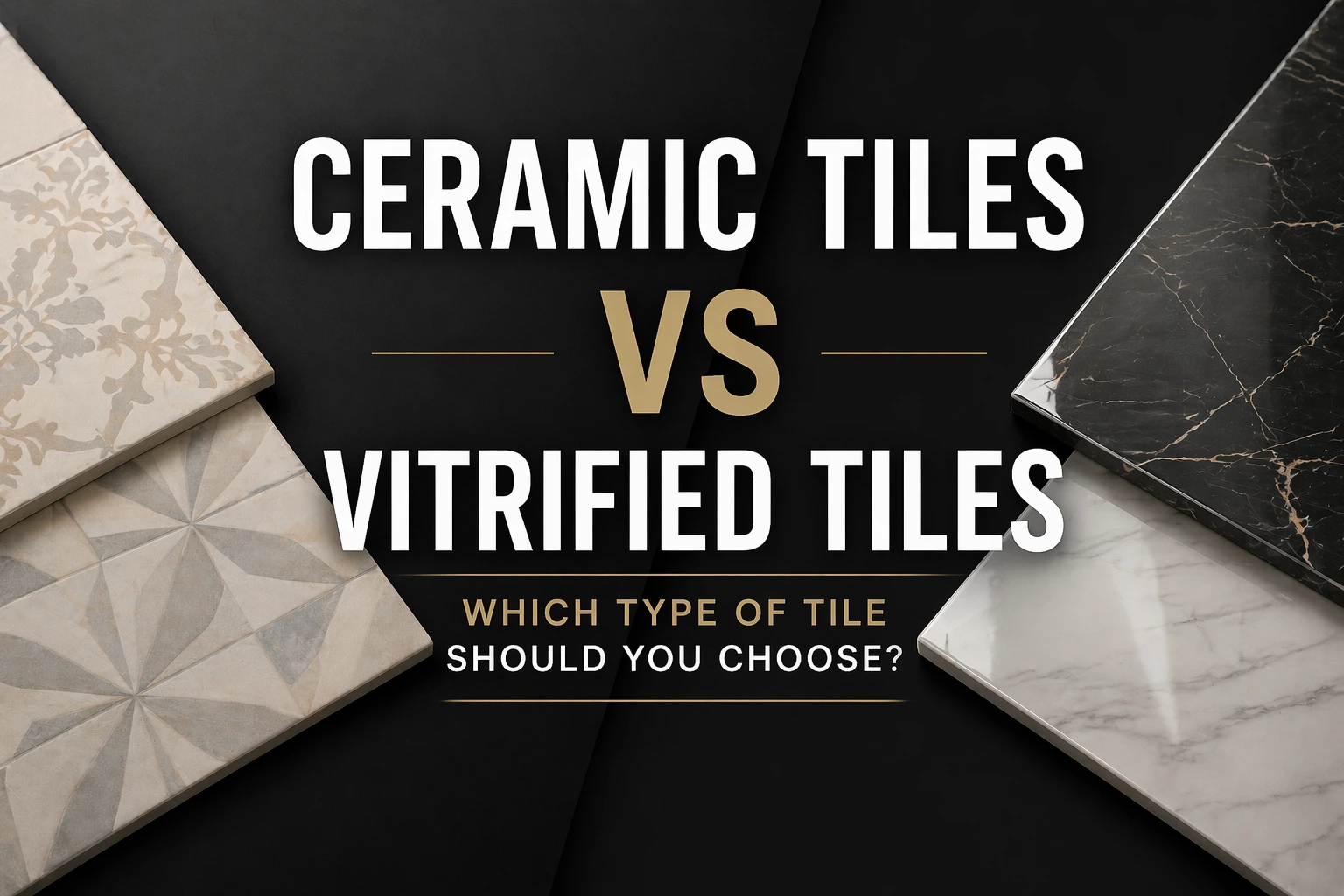
The debate over ceramic tiles vs. vitrified tiles never seems to run out when it comes to walls and floors. Choosing the right tile can affect how long it lasts, how it looks, and how easy it is to keep clean, whether you’re remodelling your home or building a new one.
We’ll explain it in a clear, straightforward way in this guide so you can make an informed choice about what works best for your space.
What are ceramic tiles?
Ceramic tiles are made by shaping and firing natural clay, sand, and water at high temperatures. A glaze is usually added to the tiles to make them look smooth, shiny, or matte.
Ceramic tiles are light, easy to cut, come in a lot of colours and patterns, and are cheaper than vitrified tiles. They work best on walls and in areas with low foot traffic.
You can use them on kitchen backsplashes, bathroom walls, and decorative walls.
Pro Tip: If you want style on a budget, ceramic tiles are great, but they aren’t the best choice for areas with a lot of foot traffic.
What are vitrified tiles?
Let’s find out what vitrified tiles are.
To make vitrified tiles, clay is mixed with silica, quartz, and feldspar and then heated to very high temperatures. This makes them very dense and almost impossible to break.
Vitrified tiles are tough and last a long time. They don’t soak up water (almost waterproof) and are hard to scratch and stain. They come in polished, matte, and textured finishes.
You can use them in living rooms, bedrooms, high-traffic areas, and commercial spaces.
If you want a high-quality, long-lasting flooring option, vitrified tiles are the way to go.
Vitrified and Ceramic Tile Differences
The difference between vitrified and ceramic tiles is clear when you look at the following chart:
| Feature | Ceramic Tiles | Vitrified Tiles |
|---|---|---|
| Material | Made from natural clay | Made from clay, silica, quartz, and feldspar |
| Durability | Less durable | Highly durable and strong |
| Water Absorption | Absorbs more water | Almost non-porous (very low water absorption) |
| Strength | Comparatively weaker | Very strong and dense |
| Maintenance | Requires more maintenance | Easy to clean and maintain |
| Finish Options | Mostly glazed surface | Available in polished, matte, and textured finishes |
| Cost | More affordable | Slightly more expensive |
| Best Use | Walls and low-traffic areas | Floors and high-traffic areas |
Which Should You Choose?
It depends on what you need.
Choose Ceramic Tiles If:
- You have a limited budget
- You need tiles for walls or decoration
- You want more design options
Choose Vitrified Tiles If:
- You need floors that will last
- You want low maintenance
- You want a high-quality, long-lasting finish
Final Thoughts
Ceramic tiles are flexible and cheap, while vitrified tiles are strong, long-lasting, and feel high-end. The smart move? Use both strategically: ceramic for walls and vitrified for floors.
If you’re building a new home or updating the inside of your current one, knowing the difference between vitrified and ceramic tiles will help you make a better investment that will last.
Transform Your Space with Valencia Ceramica
Looking to bring your vision to life with premium-quality tiles? Explore the ceramic tiles collection at Valencia Ceramica, where style meets durability.
From elegant wall tiles to high-performance ceramic flooring, Valencia Ceramica offers a wide range of designs tailored for modern homes and commercial spaces in Dubai and Sharjah.
Frequently Asked Questions
How to identify ceramic tiles and vitrified tiles?
Ceramic tiles and vitrified tiles can be identified by their density and water absorption. Ceramic tiles are lighter, slightly porous, and absorb more water, while vitrified tiles are denser, heavier, and almost non-porous with very low water absorption.
Is ceramic tile good for flooring?
Yes, ceramic tiles are good for flooring in low-traffic areas such as bedrooms and bathrooms. However, for high-traffic areas, vitrified tiles are a better choice due to their higher durability and strength.
What are the 4 types of vitrified tiles?
The four types of vitrified tiles are full body vitrified tiles, double charged vitrified tiles, glazed vitrified tiles (GVT), and polished glazed vitrified tiles (PGVT). Each type offers different finishes, durability levels, and design options.
Which is better, ceramic or vitrified tiles?
Vitrified tiles are generally better for flooring because they are more durable, water-resistant, and low maintenance. Ceramic tiles are better suited for walls and decorative applications due to their affordability and design variety.
What tile is easiest to clean in a bathroom?
Vitrified tiles are the easiest to clean in a bathroom because they are non-porous and resist stains and moisture. Glazed ceramic tiles are also easy to clean but may require more maintenance over time.